
A refrigerator is never completely silent, but it also shouldn’t sound like a power tool. If your fridge has started making new or louder noises, you can often narrow down the cause with a few simple checks.
Below is a practical guide to common fridge sounds, how to troubleshoot them, and when it’s time to call a professional fridge repair service.
Before You Start: Safety Basics
- Unplug the refrigerator before touching any internal parts, fans, or wiring.
- Move the fridge carefully—pull it straight out and avoid damaging the water line or power cord.
- Do not open sealed system components (compressor, sealed lines). Those require a licensed technician.
Quick Overview: Noises and Likely Causes
- Humming or low buzzing – normal compressor sound, or dirty condenser coils, or fridge too close to the wall.
- Clicking or ticking – thermostat cycling, start relay, or defrost timer; frequent loud clicking can signal a failing component.
- Rattling or vibrating – fridge not level, loose parts, items touching the back wall, or loose drain pan.
- Grinding, scraping, or squealing – fan blade hitting ice or debris, or worn fan motor.
- Hissing or gurgling – refrigerant flow or defrost cycle; often normal if not very loud.
- Dripping or sizzling – defrost water hitting the defrost heater; usually normal unless accompanied by leaks or burning smells.
Use the sections below to match what you hear.
1. Humming or Buzzing Sounds
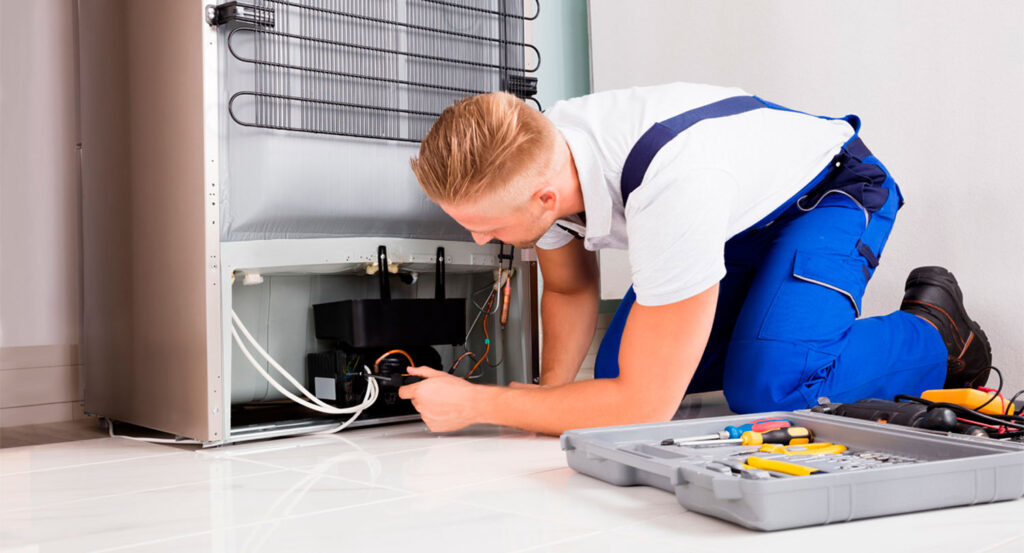
What it usually means
- Normal operation of the compressor.
- Condenser fan working harder when the fridge is warm.
- Fridge pushed too close to the wall, causing vibration.
- Dirty condenser coils forcing the compressor to run louder and longer.
What you can check
- Check the distance from the wall
- There should usually be a few inches of space behind the fridge.
- Gently pull the fridge forward and see if the sound decreases.
- Level the fridge
- Place a small level on top, front-to-back and side-to-side.
- Adjust the front legs until it’s stable and not rocking.
- Clean the condenser coils (if accessible)
- Unplug the fridge.
- Use a vacuum with a brush attachment or a coil brush.
- Dust and pet hair can significantly increase compressor noise.
If the humming turns into loud buzzing or the compressor is extremely hot to the touch, stop using the fridge and contact a fridge repair technician.
2. Clicking or Ticking Noises
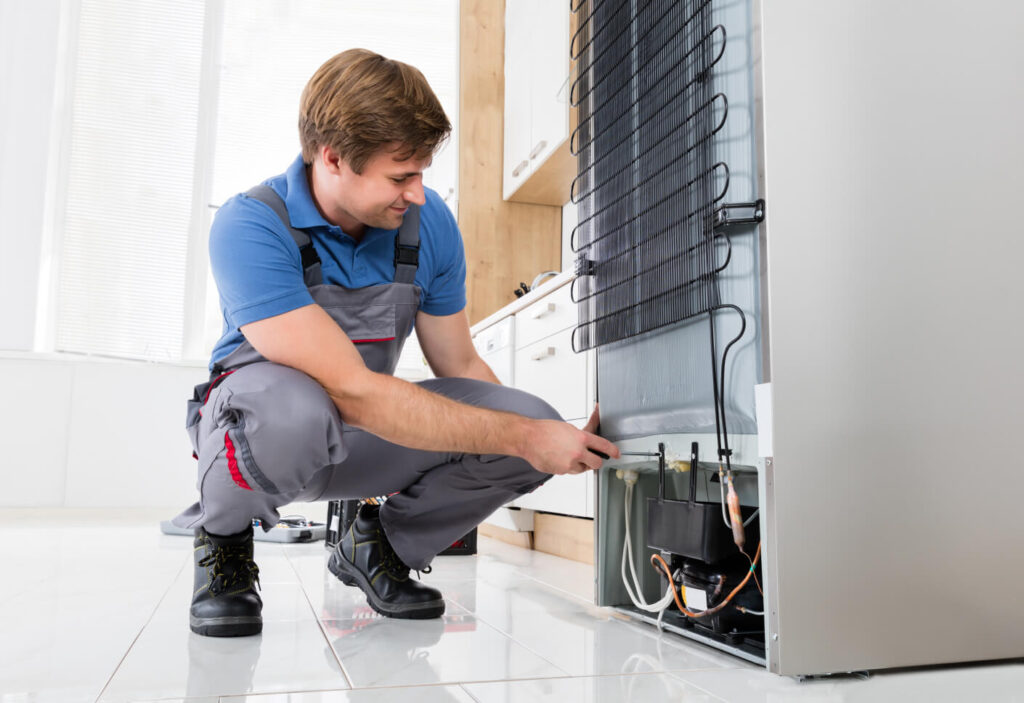
Normal clicking
- Soft, occasional clicks when the compressor starts or stops.
- Slight ticking from a defrost timer or control board.
Problem clicking
- Rapid or repetitive clicking every few seconds or minutes.
- Fridge isn’t cooling properly along with the noise.
What to check
- Listen for a pattern
- One click every so often with normal cooling is usually fine.
- Fast repeated clicks with poor cooling can indicate a failing start relay or compressor issue.
- Check power and outlet
- Make sure the plug is fully inserted.
- Avoid extension cords; plug directly into a grounded outlet.
If the fridge doesn’t cool and keeps clicking, do not keep forcing it to run—this can damage the compressor. Schedule professional fridge repair.
3. Rattling or Vibrating Noises
Common causes
- Fridge is not level or is rocking slightly.
- Items are touching the back wall inside the fridge or freezer.
- Drain pan underneath is loose and rattling.
- Tubing or cables at the back are vibrating against the cabinet.
What you can do
- Reorganize the interior
- Move glass bottles, jars, or containers away from each other and from the back wall.
- Sometimes two bottles touching can create a surprisingly loud rattle.
- Level the fridge
- Adjust the front feet until the fridge is stable and the doors swing closed gently by themselves.
- Check the drain pan (if accessible)
- Unplug the fridge and gently pull it out.
- Locate the plastic pan at the bottom and ensure it is seated correctly and not loose.
- Secure loose tubing
- Look for water lines or cables vibrating against the metal.
- Carefully reposition them or use small clips or foam pieces to reduce contact and vibration.
If rattling continues even after these steps, especially if it sounds like it’s coming from inside the back wall, call a professional.
4. Grinding, Scraping, or Squealing
These sounds are not normal and usually point to a fan problem.
Likely causes
- Evaporator fan blade (inside the freezer) hitting ice buildup or debris.
- Condenser fan blade (at the back near the compressor) rubbing against something.
- Worn or failing fan motor bearings.
How to check
- Determine where the sound comes from
- Open the freezer door. If the noise gets louder or changes, it may be the evaporator fan.
- If it’s louder at the back and near the bottom, it may be the condenser fan.
- Check for ice buildup in the freezer
- Heavy frost on the back wall can cause ice to hit the fan blades.
- Defrost the unit (power off, doors open) if there is significant ice.
- Inspect the back fan (if accessible)
- Unplug the fridge.
- Remove the lower back panel carefully.
- Look for dust, debris, or anything touching the fan blades and gently clear it.
If grinding continues after defrosting and cleaning, the fan motor may need replacement. This is typically a job for a fridge repair technician.
5. Hissing, Gurgling, Dripping, or Sizzling

Often normal
- Hissing and gurgling can be the sound of refrigerant moving through the system.
- Dripping or sizzling during a defrost cycle happens when water hits the warm defrost heater.
These sounds are usually short and not very loud.
When to be concerned
- Constant loud hissing along with a chemical smell – possible refrigerant leak (stop using and call a professional).
- Dripping sound plus visible water on the floor – blocked drain or leak.
- Sizzling combined with burning smell – unplug immediately and call a technician.
6. When Noise Is Normal
You’ll always hear some sounds from a working refrigerator, especially:
- Short compressor runs and gentle humming
- Fan noise changing as doors open and close
- Clicks at the beginning or end of cooling cycles
- Occasional pops or cracks from plastic parts expanding or contracting with temperature changes
- Soft gurgling or trickling water during defrost
If the fridge is cooling properly and the sounds are brief, consistent, and not extremely loud, it is often normal operation.
7. When to Call a Professional Fridge Repair Service
Stop relying on DIY fixes and contact a technician if:
- The noise is new, very loud, or getting worse.
- You hear repetitive clicking and the fridge is not cooling.
- There is burning smell, smoke, or extremely hot areas.
- You suspect a refrigerant leak (chemical smell, oily residue).
- DIY steps (cleaning, leveling, reorganizing, defrosting) don’t change the sound.
Professional fridge repair technicians can:
- Diagnose failing compressors, fans, and control boards.
- Safely handle sealed system issues and refrigerant.
- Replace worn parts with the correct components.
- Help extend the life of the appliance and restore quiet operation.
Summary
Noises from a refrigerator are not always a sign of failure. Many sounds come from normal operation, minor vibrations, or ice buildup that you can handle yourself:
- Start with simple checks: leveling, clearance from the wall, reorganizing items, and cleaning coils.
- Match the sound type (humming, clicking, rattling, grinding, hissing) to the likely cause using the sections above.
- Call a professional fridge repair service if the noise is loud, persistent, or combined with poor cooling or burning smells.