
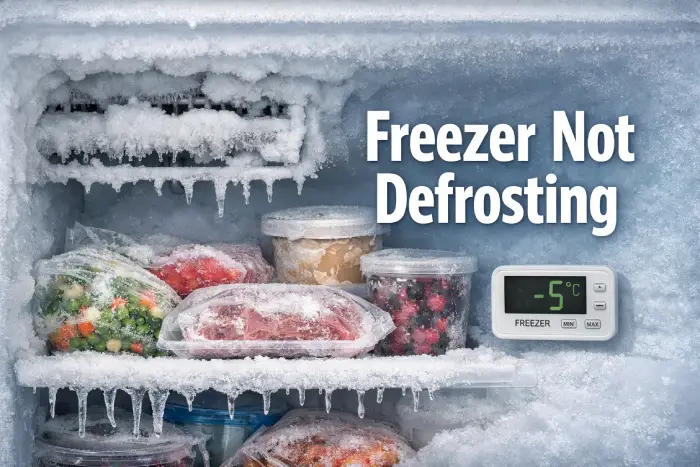
You open the door expecting neatly frozen food—and instead you find a mini glacier. When a freezer not defrosting becomes a pattern (not a one-time “door left open” moment), frost isn’t just annoying: it blocks airflow, forces longer run times, and can slowly ruin food quality.
Below is a clear, step-by-step troubleshooting guide you can follow at home, plus a table to help you match symptoms to likely causes.
What “Freezer Not Defrosting” Usually Means
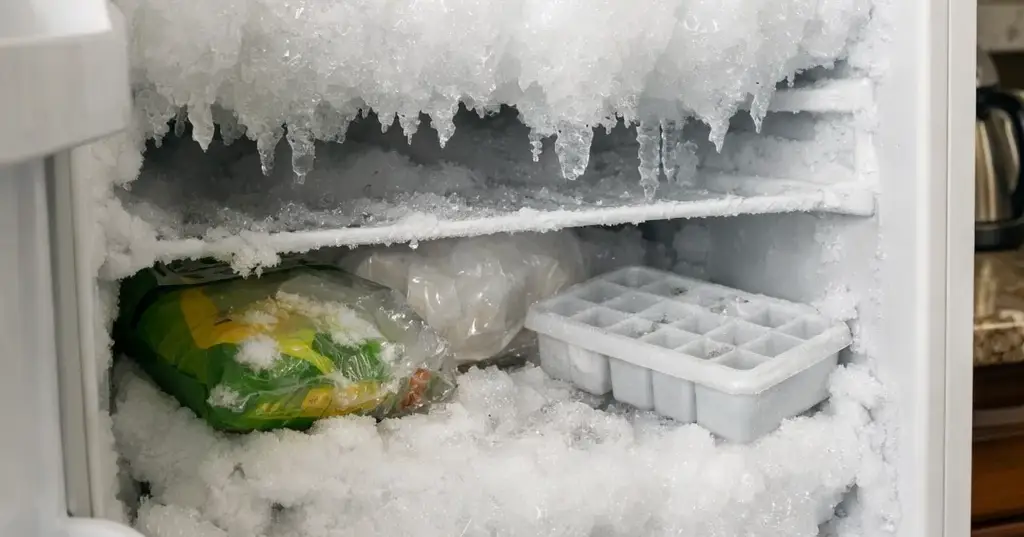
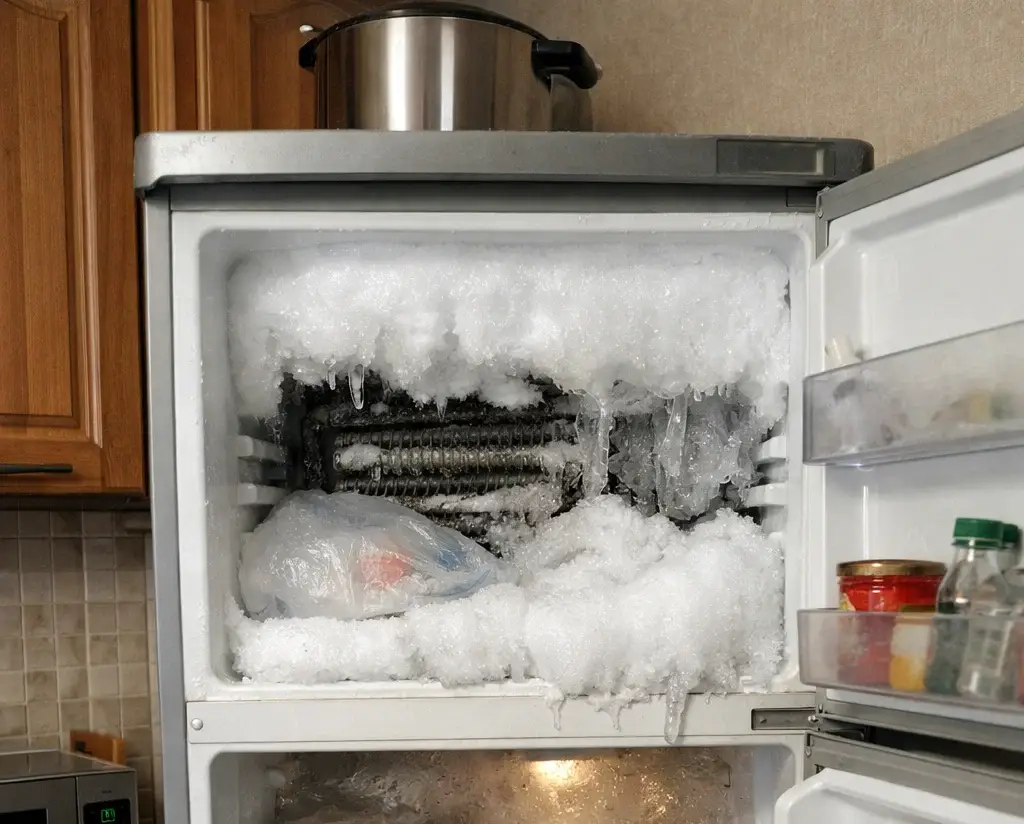
Modern “frost-free” freezers remove moisture by running a cooling cycle and periodically melting ice off the evaporator coils during a defrost cycle. If that defrost cycle doesn’t happen (or doesn’t finish), ice grows until airflow is restricted—then temperatures become uneven, drawers stick, and everything looks snowed in.
If your freezer not defrosting issue comes back every few days or weeks, it’s typically one of two categories:
- User / environment causes (settings, airflow, moisture getting inside)
- Defrost system faults (heater, thermostat, timer/board, fan issues)
- Warranty on repair
- Licensed & Experienced Techs
- Same-Day Fridge Repair
- Open 7 Days a Week
Quick Checklist Before You Do Anything Technical (5 minutes)
- Make sure the door fully closes (no packages pushing it open).
- Check for obvious gaps or folds in the door gasket.
- Confirm vents inside aren’t blocked by food containers.
- Look at the temperature setting (aim for 0°F / -18°C).
- Notice the frost type: fluffy snow vs. thick clear ice.
If the freezer not defrosting continues after these basics, use the guide below.
Symptom-to-Cause Use This to Diagnose Faster
| What you see / hear | Most likely cause | Why it happens | What to do first |
|---|---|---|---|
| Thick frost on the back wall or around vents | Door not sealing (moisture getting in) | Warm, humid air leaks inside and freezes on the coldest surfaces | Clean the gasket and do the “paper test” to confirm the seal |
| Frost builds fast after a grocery run | Warm food or uncovered liquids placed inside | Steam/heat adds moisture that later turns into ice on coils and walls | Cool hot food first; cover liquids; avoid loading the freezer with warm items |
| Frost mainly near the door or top edge | Door left slightly open or misaligned | A small gap continuously feeds moisture into the freezer | Re-level the fridge, remove obstructions, and confirm the door closes firmly |
| Freezer cold but airflow is weak, drawers stick | Evaporator coils iced over | Air can’t pass through the coil area, so circulation drops | Manual defrost, then check for the root cause (defrost system / door seal) |
| Freezer warm and fridge warm too (single compressor unit) | Fan problem, dirty condenser, or control issue | Cooling can’t move through the system or the system can’t run efficiently | Listen for fans, clean condenser coils, verify ventilation clearance |
| Ice keeps returning shortly after manual defrost | Defrost heater / thermostat / timer / control board fault | Defrost cycle isn’t activating or isn’t heating enough to clear frost | Check heater/sensor connections if accessible; otherwise schedule a technician |
When a freezer not defrosting problem matches the “ice keeps returning after manual defrost” row, you’re likely dealing with a true defrost failure.
1) Temperature Settings: Too Cold Can Create More Frost
It sounds backward, but an excessively low setting can worsen frost in some conditions because the unit runs longer and moisture has more chances to freeze and stick.
- Target: 0°F / -18°C
- If your dial is vague (1–7): move it one step warmer, wait 24–48 hours, and observe.
A freezer not defrosting complaint often improves when the temperature is correct and stable, because the defrost cycle can “catch up” instead of fighting nonstop ice formation.
2) Airflow Problems: Too Full or Too Empty
Air must circulate for a frost-free system to work. Both extremes can be a problem.
What to do (airflow rules)
- Leave 1 inch (2–3 cm) between items and the walls/vents.
- Don’t let bags or boxes cover the interior vents.
- If the freezer is often nearly empty, add two or three frozen water bottles to stabilize temperature.
This is one of the most common reasons people think they have a freezer not defrosting, when the real issue is airflow and temperature swings.
3) Door Seal Problems: The #1 Source of Moisture
If warm room air leaks in, frost is guaranteed—no defrost system can keep up forever.
Door gasket “paper test” (simple and reliable)
- Close the door on a strip of paper.
- Gently pull.
- If it slides out easily in multiple spots, the gasket isn’t sealing.
Also clean the gasket channel with warm soapy water, dry it fully, and make sure shelves/bins aren’t preventing closure. A freezer not defrosting situation often turns out to be a sealing issue, not a broken part.
4) Habits That Quietly Create Frost
Even with a perfect freezer, these behaviors add moisture faster than the defrost cycle can remove it:
- Freezing uncovered liquids (ice crystals form everywhere)
- Putting hot leftovers straight into the freezer
- Long “door-open” browsing sessions
- Storing frequently used items in the back (causes repeated long openings)
If your freezer not defrosting complaint started after routine changes (meal prep, bulk buying, new kitchen humidity), fix the habit first.
5) When It’s Probably a Defrost System Failure
If you manually defrost (unplug, doors open, towels down), everything works normally for a short time… and then frost returns quickly, that points to defrost components.
The usual suspects
- Defrost heater (doesn’t warm coils → ice never melts)
- Defrost thermostat / sensor (doesn’t signal correctly → cycle stops)
- Defrost timer or control board (cycle never starts)
- Evaporator fan (airflow fails → frost piles up and temps go uneven)
A true freezer not defrosting repair often requires testing continuity and voltages. If you’re not comfortable using a multimeter safely, it’s reasonable to call a technician—especially if food is thawing or the unit is running constantly.
Two Fast “Prevention Routines” That Actually Work
Weekly (2 minutes)
- Wipe the gasket and the sealing surface.
- Check vents for blocked airflow.
- Confirm setting is still near 0°F / -18°C.
Monthly (10 minutes)
- Remove old/freezer-burned items (less door-open time).
- Re-pack items so air can move.
- Clean crumbs/ice chips from door edges and rails.
With these routines, a freezer not defrosting issue is less likely to return—even after you fix the main cause.
When to Call for Service
Call for help if any of these are true:
- Frost returns within 7–14 days after a full manual defrost
- The freezer temperature rises above safe freezing
- You hear clicking, buzzing, or the unit runs nearly nonstop
- You see heavy ice behind the rear interior panel (coil area)
Those are strong signs the freezer not defrosting problem is component-related, not just maintenance
.
- Warranty on repair
- Licensed & Experienced Techs
- Same-Day Fridge Repair
- Open 7 Days a Week
A freezer not defrosting usually comes down to moisture entry, airflow imbalance, or a failing defrost component. Start with the easy wins (temperature, airflow, door seal, habits). If frost keeps returning after a complete manual defrost, it’s time to suspect the defrost heater/sensor/timer or control board.
If you want, tell me your freezer type (top-freezer, bottom-freezer, side-by-side, or upright) and the exact symptom (where the ice forms). I’ll narrow it down to the top 2–3 likely causes and the safest next step.