
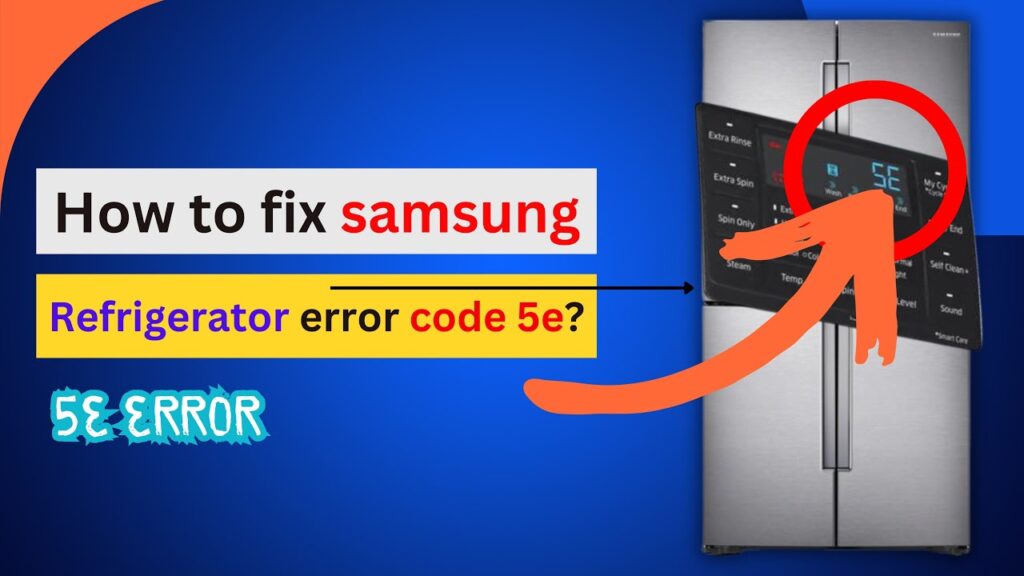
What the Samsung 5E / SE Error Code Means
On Samsung refrigerators, error code 5E (sometimes displayed as SE or 5C on some panels) usually indicates a problem with the defrost system, most often with the defrost sensor in the fresh food compartment.
When the sensor or related components do not work correctly, the refrigerator cannot defrost the evaporator coil as designed. Ice collects around the coil, airflow is blocked, and the fridge section starts to warm up while the freezer may stay cold but builds more frost.
Typical Symptoms of Error 5E / SE
You may notice one or more of the following:
- 5E or SE flashing on the display
- The refrigerator section is not cold enough
- Thick frost or a solid ice layer on the back wall inside the fridge
- Rattling or scraping sounds from the fan (ice touching the blades)
- Water under the drawers or on the bottom of the fridge
- The error returns shortly after being cleared on the display
These signs all point to defrost and ice buildup issues.
Safety First
Before any troubleshooting beyond a simple reset:
- Unplug the refrigerator or switch off the circuit breaker.
- Do not work on live electrical components.
- If you are uncomfortable with tools or see signs of burning or damaged wiring, stop and call a technician.
Step 1: Try a Simple Reset
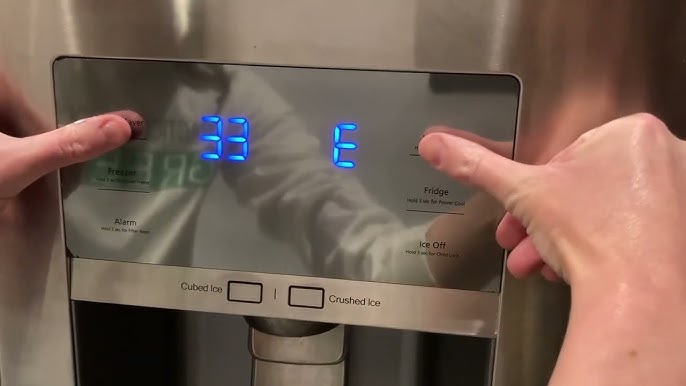
Sometimes the code appears after a short power interruption or glitch.
- Power cycle
- Unplug the refrigerator for 5–10 minutes.
- Plug it back in and wait for the control panel to restart.
- If the error stays off and the fridge cools normally, the issue may have been temporary.
- Control panel reset (on many models)
- Press and hold the LIGHTING and ENERGY SAVER buttons together for about 10 seconds.
- The display should beep and clear the error if it was only a panel or logic fault.
If 5E/SE returns after a short time, the defrost system likely needs more attention.
Step 2: Manually Defrost the Refrigerator
If the evaporator coil is buried in ice, the sensor and fan cannot work properly and the error can repeat.
- Empty the fridge section and move food to a cooler if necessary.
- Unplug the refrigerator.
- Leave the fridge doors open.
- Allow the unit to thaw for 12–24 hours, depending on how much ice has built up.
- Place towels inside the fridge and on the floor around it to absorb meltwater.
Avoid using sharp tools, knives, or screwdrivers to break ice – you can puncture the evaporator and cause irreversible damage.
After the unit is fully defrosted, plug it back in and monitor:
- If cooling returns to normal and the error does not come back, ice buildup was the main problem.
- If the 5E/SE error returns within hours or a few days, there is an underlying defrost fault.
Step 3: Check for Simple Causes of Repeat Ice Buildup
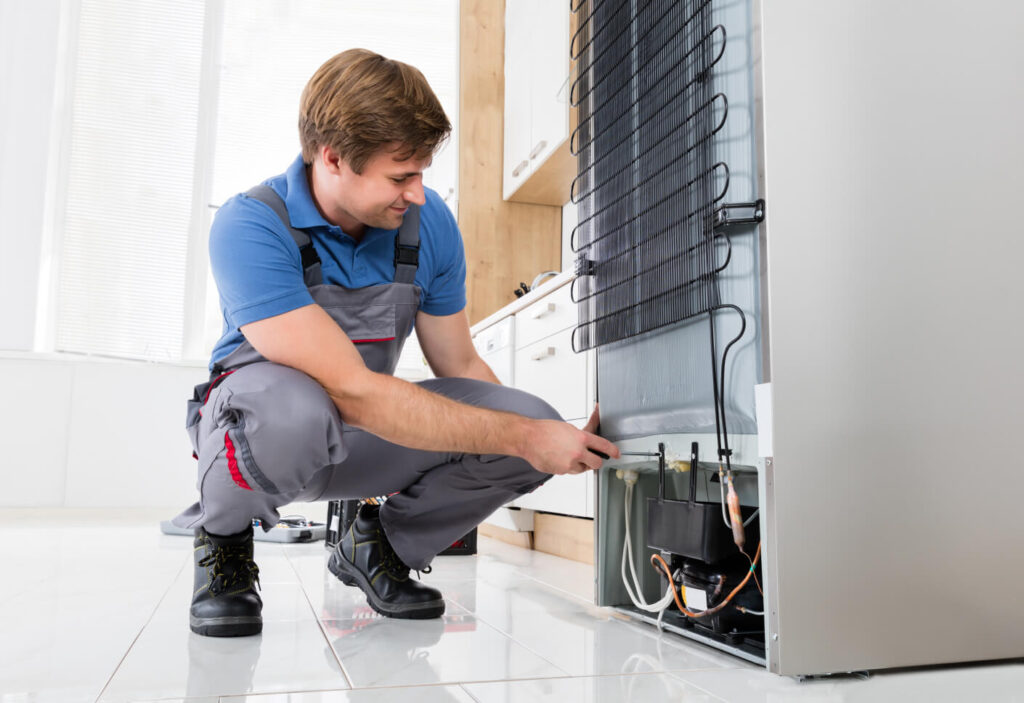
Before assuming a failed part, rule out basic mechanical and usage issues:
- Door gaskets
- Inspect the rubber seals around each door for cracks, gaps, or dirt.
- Close a sheet of paper in the door and pull it out; if it slides out with no resistance in several spots, the seal may be weak.
- Clean the gaskets with warm soapy water, then dry them.
- Interior air vents
- Make sure containers and boxes are not pressed directly against the back wall or vents.
- Leave some space around vents so cold air can circulate freely.
- Defrost drain outlet
- On many models, a small drain opening below the evaporator lets meltwater exit.
- If you can see the drain area, check for obvious ice or debris and carefully clear it.
- A blocked drain causes water to freeze and spread, making ice buildup worse.
If, after a manual defrost and these checks, the error still reappears, the sensor, heater, wiring, or control board may be faulty.
Step 4: Defrost System Components to Inspect
Only perform these steps if the refrigerator is unplugged and you are confident using basic tools. If not, skip to the professional repair section.
- Defrost sensor (evaporator sensor)
- Usually clipped to, or very close to, the evaporator coil behind the inside rear panel of the fridge.
- Remove shelves and the inner back panel (screws or clips, depending on model).
- Look for a cracked sensor housing, corroded or loose connectors, or broken wires.
- A failed sensor is one of the most common causes of the 5E/SE error.
- Defrost heater
- Typically mounted along the bottom or around the evaporator coil.
- Check for visible breaks, burn marks, or melted insulation.
- Wiring harness and connectors
- Follow the sensor and heater wires to their connectors.
- Inspect for burnt areas, brittle insulation, or loose plugs.
- Main control board
- In some cases, the control board fails to read the sensor correctly or does not trigger the defrost heater at the right time.
- Diagnosis and replacement of the control board are best left to a qualified technician.
If you own a multimeter and know how to use it safely, you can check the resistance of the sensor and heater against the values specified for your exact model. If readings are out of range, the part should be replaced.
Step 5: When to Call a Professional Technician
You should contact a professional if:
- The 5E/SE code returns soon after a full manual defrost
- Ice quickly builds up again on the back wall or around the evaporator
- You see damaged wiring, signs of overheating, or melted plastic
- You are not comfortable disassembling panels or testing components
If you are in New York City and need a reliable repair, you can schedule service for professional Samsung refrigerator repair in NYC. A trained technician can quickly test the defrost sensor, heater, wiring, and control board and replace the faulty parts with the correct components.