
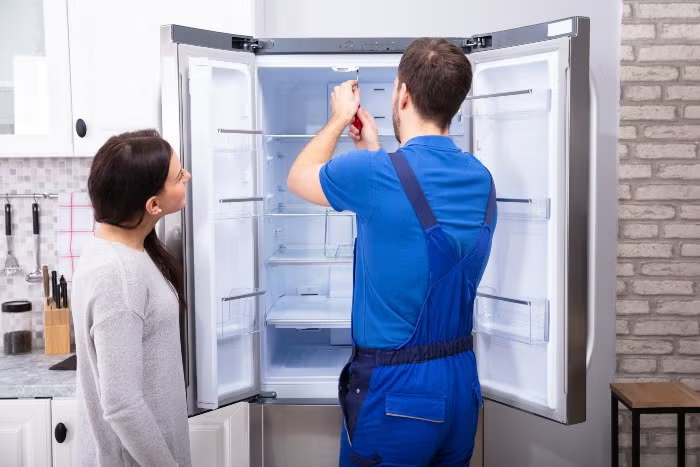
Your refrigerator runs 24/7, quietly preserving your food — but like any hard-working machine, it needs care to stay efficient. Ignoring small signs today can lead to costly repairs tomorrow. Below are common issues, what causes them, and exactly how to prevent or fix them.
Problem 1: Warm Air Leaking Into the Fridge

Cause: Damaged or dirty door seals (gaskets) let warm air in, making the compressor overwork to maintain cool temperatures.
Solution:
- Do the “dollar bill test”: close the fridge door on a dollar bill — if you can pull it out easily, your seal is weak.
- Clean the gasket with warm soapy water.
- If it’s cracked or loose, replace the seal entirely. Most gaskets can be swapped without tools.
Problem 2: Fridge Not Cooling Properly

Cause: Thermostat is set incorrectly, or the fridge is overloaded and blocking airflow.
Solution:
- Set the temperature between 37°F and 40°F (3°C–4°C).
- Don’t block the back vents with large containers.
- Keep food spaced out to allow even air circulation.
- If problems persist, consider professional fridge repair to check internal components like the evaporator fan or compressor.
Problem 3: Excessive Energy Consumption
Cause: Dirty condenser coils force the fridge to consume more power to cool effectively.
Solution:
- Locate the condenser coils (usually at the back or underneath).
- Use a coil cleaning brush or vacuum every 6–12 months.
- Ensure the area around the fridge has enough ventilation and isn’t pressed against the wall.
Problem 4: Frost Build-Up in Freezer
Cause: Frequent door opening or a failing defrost system.
Solution:
- Check door seals and avoid leaving the freezer open too long.
- Defrost manually if you don’t have an auto-defrost model — unplug the unit and let the ice melt naturally.
- Persistent frost issues may point to defrost timer or heater failure — call a fridge repair expert to inspect internal parts.
Problem 5: Strange Noises — Buzzing, Clicking, or Humming

Cause: Could be the compressor, condenser fan, or even items vibrating on top of the fridge.
Solution:
- First, remove any objects placed on top that might be rattling.
- Clean the fan area and check if the noise continues when the door is open.
- If the compressor is clicking but not starting, it may need replacement — don’t DIY this. Schedule a fridge repair for diagnosis.
Problem 6: Water Leaks on the Floor
Cause: Clogged or frozen defrost drain.
Solution:
- Unplug the fridge and locate the drain (usually at the back, inside the fridge).
- Use hot water or a pipe cleaner to clear the blockage.
- Empty and clean the drain pan underneath the unit as well.
Problem 7: Food Spoiling Too Quickly
Cause: Uneven cooling due to poor airflow or temperature fluctuations.
Solution:
- Avoid overpacking the fridge — it disrupts airflow.
- Store perishables in colder zones (usually lower shelves).
- Keep an appliance thermometer inside to monitor for any unexpected changes.
Bonus: General Maintenance Habits That Pay Off
✅ Wipe interior shelves weekly to avoid spills turning into mold.
✅ Keep fridge 2–3 inches from the wall to improve airflow.
✅ Don’t place hot food inside — let it cool to room temperature first.
✅ Check for odors or spoiled items weekly — bad smells can linger in seals and vents.
When to Call a Professional
If you’ve done all the basic checks and your fridge is still not cooling, leaking, or making strange sounds, it’s time to call in an expert. Reliable fridge repair technicians can quickly pinpoint the issue and help extend the life of your appliance — often saving you the cost of full replacement.
Conclusion
Think of fridge maintenance like a small investment that pays off every day. By regularly checking seals, cleaning coils, and watching for signs of trouble, you not only extend the life of your fridge — you keep your food fresher and your energy bill lower.
Set a reminder once a month. It takes 10–15 minutes to inspect your unit, and it could save you hundreds in repairs down the road.