
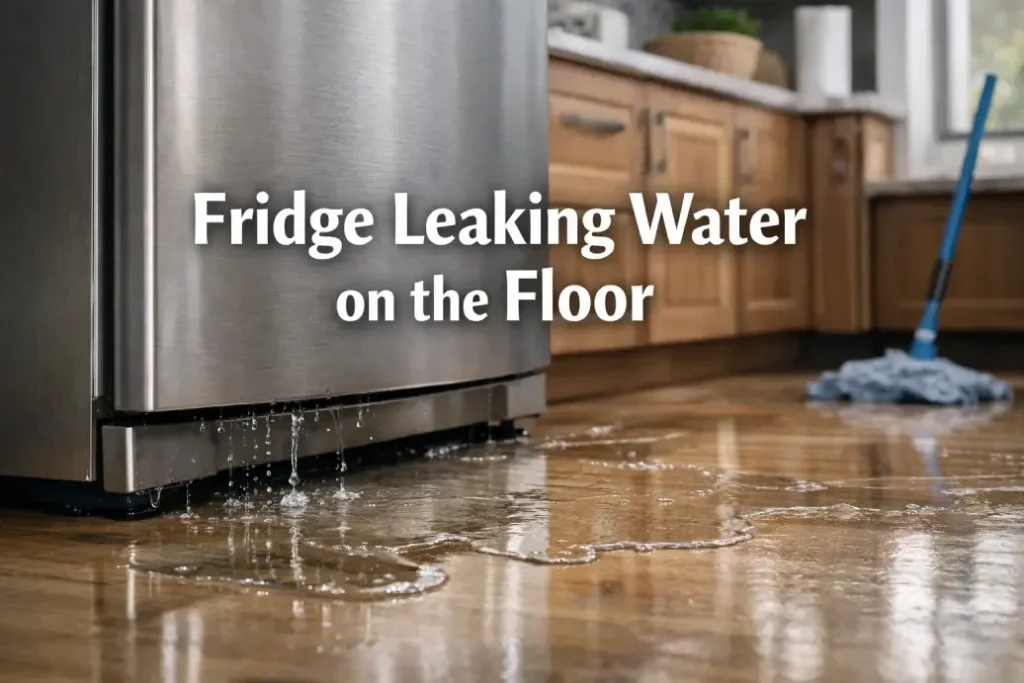
A puddle of water under your refrigerator can look alarming, but in many cases the cause is straightforward—often related to condensation, defrost drainage, or a simple connection issue. The key is to identify where the water is coming from and when it appears, because that points to the right solution.
Below is a clear, article-style guide that explains the most common reasons a fridge leaks water onto the floor, detailed step-by-step fixes, and when it’s time to call a service technician.
First: Identify What Kind of Water It Is
Before you start troubleshooting, do a quick check:
- Clear, odorless water → usually condensation/defrost drain or water supply line.
- Sticky water → likely a spill from inside that’s slowly leaking out.
- Water with a smell → could be a dirty drip pan, mold in drain tubing, or food residue.
Also note:
- Does it happen constantly, or only after the defrost cycle?
- Is the puddle front, back, or under the middle?
- Do you have a water/ice dispenser (and therefore a water supply line)?
- Warranty on repair
- Licensed & Experienced Techs
- Same-Day Fridge Repair
- Open 7 Days a Week
The Most Common Reasons a Fridge Leaks Water
1) Clogged or Frozen Defrost Drain (Top Cause)
Most modern refrigerators periodically defrost. Meltwater should flow into a drain hole, down a tube, and into a drip pan near the compressor.
If the drain gets blocked by ice, food particles, or sludge, water backs up and can leak onto the floor.
Typical signs
- Water pooling inside the fridge (often under crisper drawers).
- Leak appears intermittently, especially after defrost.
How to fix it (detailed)
- Unplug the fridge (safety first).
- Locate the drain hole:
- Often at the back of the fridge compartment or behind the freezer’s rear panel.
- If it’s iced over, melt the ice:
- Use a hair dryer on low (keep moving it; don’t overheat plastic).
- Or place bowls of hot water inside and wait.
- Flush the drain:
- Use warm water in a turkey baster / syringe.
- Repeat until it drains freely.
- Clean the tube:
- If accessible from the back, remove the drain tube end and clean it.
- A flexible plastic tube brush helps.
- Optional: sanitize
- Use a mild solution (like warm water + a little baking soda) to reduce gunk buildup.
Prevention
- Keep food covered, wipe spills quickly, avoid crumbs near air vents and drain areas.
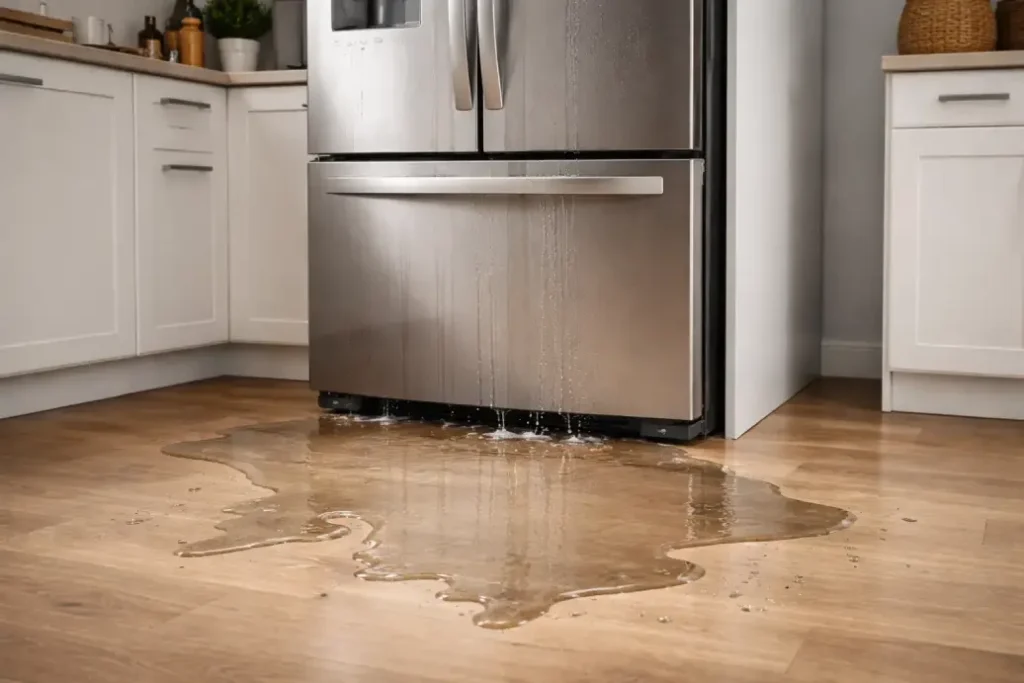
2) Cracked, Shifted, or Overflowing Drip Pan
The drip pan collects defrost water and evaporates it using compressor heat. Over time, pans can crack, warp, or shift out of position.
Typical signs
- Water usually appears under the back or center of the fridge.
- You may notice the pan is dirty or smells.
How to fix it
- Pull the fridge out slightly and locate the drip pan.
- Check:
- Is it cracked?
- Is it misaligned?
- Is it overflowing due to too much water (often caused by another issue like a drain clog)?
- Clean it with warm soapy water, dry it, and reinstall properly.
- Replace it if damaged.
3) Water Supply Line Leak (If You Have Ice Maker / Dispenser)
If your refrigerator has a water connection, leaks can come from:
- Loose fittings
- Cracked plastic tubing
- A pinhole in the line
- Leaking filter housing or valve
Typical signs
- Water accumulates near the back, sometimes steadily.
- You may see moisture on the line or fittings.
How to fix it
- Turn off the water supply to the fridge.
- Inspect the line and connections:
- Look for drips at the valve, couplers, and filter housing.
- Tighten fittings gently (don’t overtighten).
- If tubing is damaged, replace that section.
- If the filter housing is leaking, reseat the filter or replace housing seals.
Important note: even a tiny leak can create a large puddle over time.
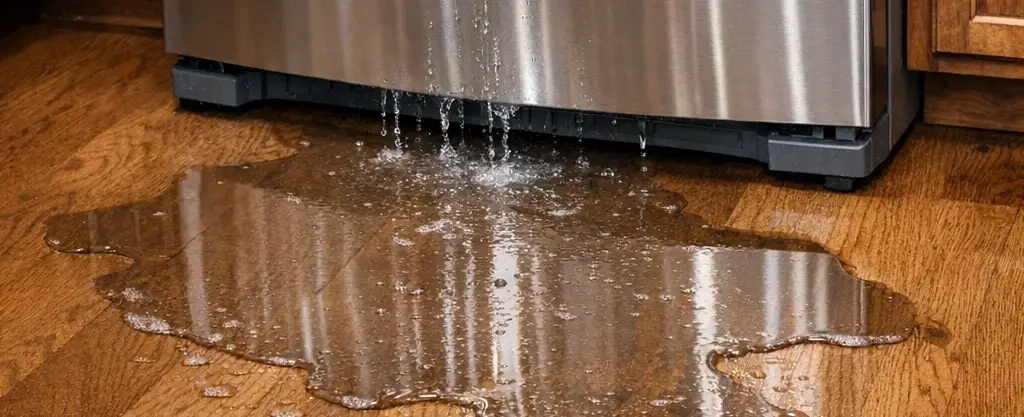
4) Door Seal (Gasket) Problems Causing Excess Condensation
When the door seal doesn’t close tightly, warm humid air enters. That creates extra condensation and can overwhelm the normal drainage path.
Typical signs
- Moisture beads inside the fridge.
- Food spoils faster or temperature fluctuates.
- You feel cool air leaking or the door doesn’t “grab” shut.
How to check
- Do the “paper test”: close the door on a piece of paper and pull.
- If it slides out easily, the seal may be weak.
- Clean gasket with mild soap and warm water.
- If warped, gently warm and reshape (hair dryer on low).
- Replace if torn, hardened, or no longer sealing.
5) Fridge Not Level (Water Goes the Wrong Way)
Refrigerators are designed to drain water along a specific path. If the fridge tilts forward or sideways, water may spill out instead of reaching the drain.
Typical signs
- Water appears toward the front edge.
- Door may swing open by itself.
How to fix it
- Use a level tool.
- Adjust front leveling legs:
- Slightly higher in front is common so the doors close properly.
6) High Humidity + Frequent Door Opening
In humid climates or busy kitchens, condensation increases. This may not be a “defect,” but it can reveal borderline issues (like a partially clogged drain or weak gasket).
What helps
- Minimize door-open time.
- Check gasket seal.
- Keep fridge temperature stable (avoid overstuffing vents).
- Use proper settings (not too warm).
Quick Diagnostic: Symptom → Likely Cause → Best Fix
| What you notice | Most likely cause | Best first action |
|---|---|---|
| Water under crisper drawers (inside the fridge) | Clogged or frozen defrost drain | Thaw the drain area and flush the drain hole with warm water. |
| Puddle near the back of the refrigerator | Water supply line leak or drip pan misalignment/crack | Inspect tubing and fittings; slide out and check the drip pan. |
| Water appears after defrost (intermittent leaks) | Partial defrost drain blockage | Clear the drain tube and sanitize it to prevent repeat clogs. |
| Puddle at the front + door doesn’t close cleanly | Refrigerator not level or gasket not sealing | Level the fridge; clean the gasket and do a paper-strip seal test. |
| Bad odor near the bottom/back | Dirty drip pan or sludge in the drain line | Clean the drip pan thoroughly and flush the drain line. |
Step-by-Step: A Safe Troubleshooting Order (Most Efficient)
- Wipe everything dry and observe where it returns first.
- Check inside the fridge (especially under drawers).
- Inspect door gasket for gaps or damage.
- Confirm the fridge is level.
- If you have a dispenser/ice maker:
- Check water line & filter housing.
- Check/clean drip pan and make sure it’s aligned.
- If water still returns:
- Likely an internal drain tube freeze/clog, valve leak, or defrost system issue.
When You Should Call a Service Technician
You can often handle basic clogs and leveling yourself. But you should contact a service center if:
- The leak continues after you clear the drain and check the line.
- You see ice buildup that keeps returning (may indicate defrost heater, thermostat, sensor, or control problem).
- The water inlet valve is leaking or the dispenser area is wet internally.
- You notice electrical smells, unusual buzzing, or water near wiring.
- The fridge isn’t cooling properly along with the leak.
- You can’t access the drain system without removing panels and you’re not comfortable doing so.
Rule of thumb:
If you’ve done the “safe basics” (drain flush, pan check, water line inspection, leveling, gasket test) and the leak persists, it’s worth calling service—continuing leaks can damage floors and lead to mold.
- Warranty on repair
- Licensed & Experienced Techs
- Same-Day Fridge Repair
- Open 7 Days a Week
Tips to Prevent Future Leaks
- Clean spills promptly, especially near the back of shelves.
- Every few months, flush the drain with warm water (if accessible).
- Replace water filters on schedule (old filters can cause pressure issues).
- Keep the fridge properly level and avoid blocking interior vents.
- Check gaskets yearly; clean them so they stay flexible.