
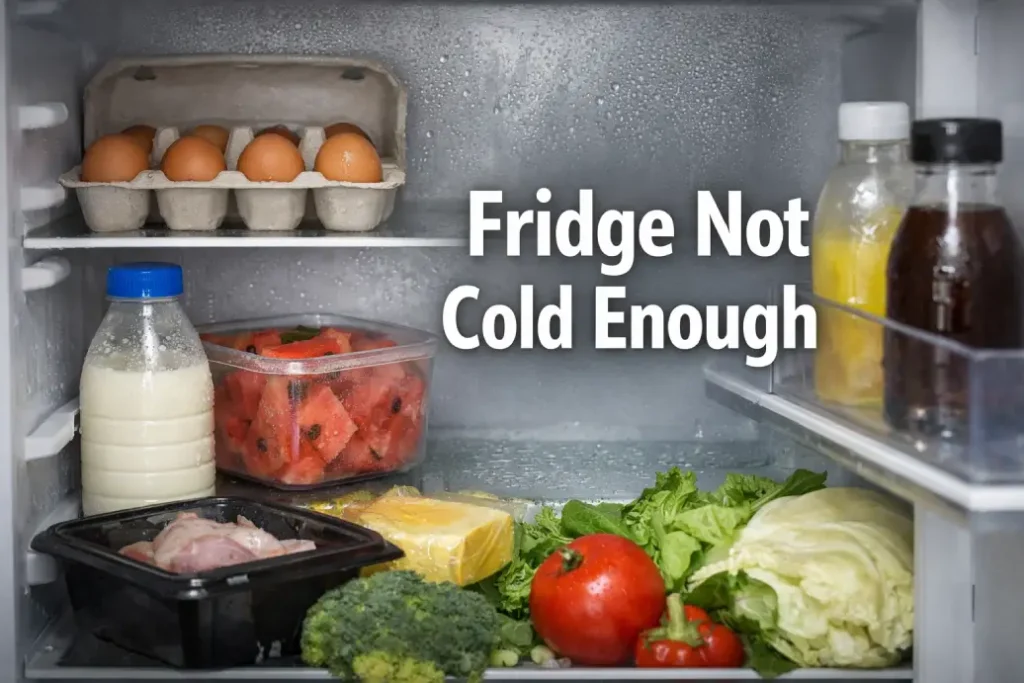
When your fridge not cold enough problem shows up, it rarely happens “for no reason.” Most of the time, it’s airflow, heat release, or a small control issue that snowballs into warm shelves and nervous grocery-checking.
This guide walks you through the fastest checks first, then the deeper fixes—so you can stop guessing and start narrowing it down.
First, Confirm It’s Really “Not Cold Enough”
Before you start moving the fridge or buying parts, verify the temperature.
- Target fridge temperature: 35–38°F (1.6–3.3°C)
- Food safety line: 40°F (4.4°C) and below
If your fridge not cold enough complaint is “milk spoils early” or “everything feels slightly warm,” a cheap fridge thermometer often reveals you’re hovering at 42–47°F—close, but unsafe long-term.
- Warranty on repair
- Licensed & Experienced Techs
- Same-Day Fridge Repair
- Open 7 Days a Week
Quick Wins That Fix a Lot of Cases
These take minutes and solve a surprising number of “my fridge not cold enough” situations.
- Check the control setting: Someone may have bumped it warmer during cleaning or loading groceries.
- Reduce door opening: Frequent opening dumps cold air fast, especially in smaller fridges.
- Don’t block vents: Packed shelves can choke airflow and create warm zones.
- Let hot food cool first: Putting big pots inside raises internal temps for hours.
If after these steps your fridge not cold enough issue persists, move to the root-cause checks below.
Common Causes, What You’ll Notice, and What To Do
| Cause | Typical symptoms | What you can do safely | When to call a pro |
|---|---|---|---|
| Dirty condenser coils | Runs a lot, sides feel warm, cooling feels weak | Unplug the fridge, vacuum/brush coils (rear or underneath), then restore airflow clearance | If the compressor stays extremely hot or temps don’t improve after cleaning |
| Bad door gasket / poor seal | Condensation, warm door edges, “leaky” cooling, frost near the door | Clean the gasket, remove debris, do a paper-strip seal test around the full perimeter | If the gasket is torn, hardened, warped, or won’t seal even after alignment |
| Poor clearance / weak ventilation | Performs worse in warm weather, cabinet area feels hot, longer run times | Give the unit breathing room (especially behind), keep grills/vents clear, avoid pushing it tight to the wall | If it’s a built-in install and airflow can’t be fixed without modifying the space |
| Evaporator fan issue | Freezer seems cold but fridge is warm, uneven temps, weak airflow from vents | Listen for the fan in the freezer area; check for ice blocking airflow and avoid overpacking vents | If the fan is silent, grinding, or stops/starts (motor or wiring replacement likely) |
| Ice buildup blocking airflow | Fridge warms up, freezer has a “frost wall,” drawers stick, airflow feels weak | Manual defrost (power off, doors open) and check door seals to reduce moisture entry | If frost returns quickly (often points to a defrost heater/sensor/control problem) |
| Thermostat / temperature sensor problem | Temperature swings, over-cooling or under-cooling, inconsistent cycling | Reset the unit (unplug 3–5 minutes), verify settings, confirm real temps with a thermometer | If the error repeats or diagnosis requires testing sensors/boards |
| Low refrigerant / sealed-system issue | Runs constantly but barely cools, may see oily residue near lines | None—don’t attempt refrigerant or sealed-system DIY | Always (sealed-system work requires a certified technician and proper equipment) |
This table is your “decision map” when fridge not cold enough becomes a repeating headache.
Step-by-Step Troubleshooting (In the Right Order)
1) Clean the Condenser Coils (High Impact)
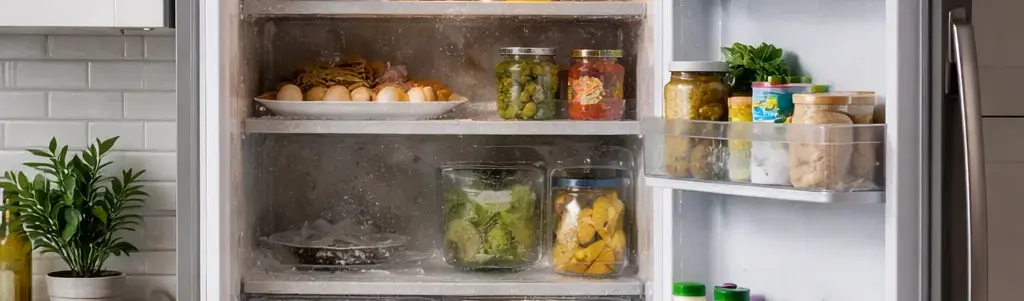
If the coils are dusty, the fridge can’t dump heat effectively—cooling drops.
How:
- Unplug the fridge.
- Pull it out carefully.
- Vacuum and brush coils (back panel or underneath kick plate).
- Plug back in and give it time to stabilize.
A dirty coil is one of the most common reasons a fridge not cold enough complaint appears out of nowhere.
2) Test the Door Seal (Gasket)
A weak seal lets cold air leak and humidity enter—your fridge works harder and cools worse.
Paper test:
- Close the door on a strip of paper.
- If it slides out easily in multiple spots, the seal is weak.
Clean first. If it’s torn or stiff, replacement is often the real fix for fridge not cold enough symptoms.
3) Check Airflow Inside the Fridge
Even if the unit is producing cold air, blocked vents can keep it from reaching the shelves.
- Keep the back wall vents clear
- Don’t pack items tightly against the rear panel
- Avoid overstuffing (especially with tall containers)
Poor circulation is a silent cause of “fridge not cold enough but freezer seems fine.”
If the Freezer Is Cold but the Fridge Is Warm
This pattern usually screams “airflow problem” between compartments.
Common culprits:
- Evaporator fan not running
- Damper stuck closed
- Frost/ice blocking the air channel
If your fridge not cold enough issue matches this pattern, listen for a fan in the freezer. No fan noise (or harsh grinding) is a strong clue.
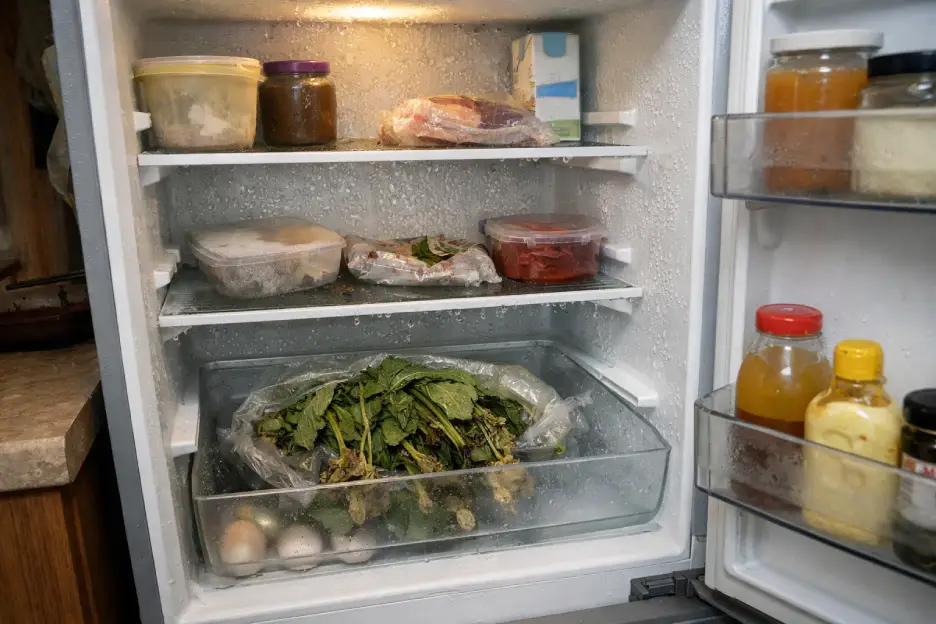
A Safe “Reset” You Can Try
If controls are glitchy, a basic reset can help.
- Unplug fridge (or flip breaker) for 5–10 minutes
- Plug back in
- Set temps to normal
- Wait 12–24 hours for stable readings
If after a full day your fridge not cold enough problem remains, it’s time to treat it as a mechanical or airflow fault—not a temporary hiccup.
When to Stop DIY and Call a Technician
Call for service if you notice any of these:
- Fridge runs nonstop and still can’t cool
- Loud clicking + repeated start/stop behavior
- Frost returns quickly after defrosting
- You suspect refrigerant/sealed-system problems
At that point, continuing DIY often wastes time—and can turn a fixable fridge not cold enough issue into a bigger repair.
- Warranty on repair
- Licensed & Experienced Techs
- Same-Day Fridge Repair
- Open 7 Days a Week
Prevent It from Happening Again
A little maintenance keeps your temperatures steady.
- Clean coils every 3–6 months (more often with pets)
- Keep vents clear inside the fridge
- Don’t overload shelves with warm groceries all at once
- Check the gasket when you notice condensation
If you want, tell me your fridge type (top-freezer, bottom-freezer, side-by-side, French door) and the main symptom (freezer cold or warm too). I’ll tailor the checklist to your exact fridge not cold enough scenario.