
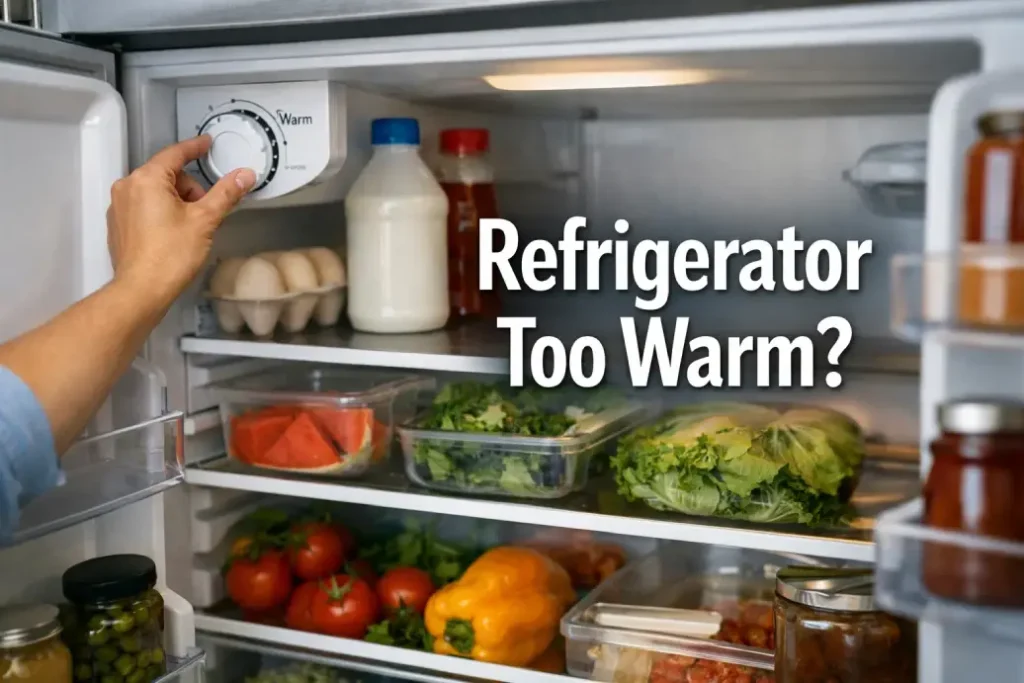
When a refrigerator too warm problem shows up, it’s easy to blame the whole appliance. In reality, many “warm fridge” cases come down to airflow, dirty parts, or a simple setting mistake. This guide helps you confirm the temperature issue, pinpoint the likely cause, and try safe fixes before you spend money on parts or service.
1) Quick temperature check (don’t skip this)
A fridge can feel “not cold enough” and still be in a safe range. If your refrigerator too warm concern is real, you should verify with a thermometer.
Safe target ranges
| Compartment | Recommended Temp | Food Safety Risk Starts |
|---|---|---|
| Refrigerator section | 35–38°F (2–3°C) | Above 40°F (4°C) |
| Freezer section | 0°F (-18°C) | Above 5°F (-15°C) |
How to test:
- Put a fridge thermometer on the middle shelf (not in the door).
- Keep the door closed for 2–4 hours.
- Repeat once to confirm.
If you’re above 40°F (4°C) for more than 2 hours, treat perishables carefully.
- Warranty on repair
- Licensed & Experienced Techs
- Same-Day Fridge Repair
- Open 7 Days a Week
2) If the freezer is cold but the fridge is warm
This pattern usually means the cooling system works, but cold air isn’t reaching the refrigerator compartment. The most common “freezer OK / fridge warm” causes are blocked vents, frost buildup, a failing evaporator fan, or a stuck damper.
3) The most common causes of a warm fridge
Below are the usual suspects when refrigerator too warm complaints happen, ordered by how often they show up in real homes.
Airflow and usage issues (most DIY-friendly)
- Blocked air vents (food packed tightly against vents)
- Overfilled shelves (cold air can’t circulate)
- Door not sealing (gasket leaks or door misaligned)
- Frequent door openings (especially in hot kitchens)
- Warm food loaded all at once (large pots, meal prep trays)
Mechanical or electrical issues (often needs a pro)
- Dirty condenser coils (can’t dump heat, cooling drops)
- Evaporator fan not running (freezer cold, fridge warm)
- Defrost system failure (frost blocks airflow)
- Thermostat/temperature sensor problems
- Compressor or start relay trouble (everything warm, often no steady cooling)
4) Step-by-step troubleshooting (do this in order)
When your refrigerator too warm issue appears, follow this sequence so you don’t chase the wrong fix.
Step 1: Check settings and modes
- Confirm the fridge isn’t in “Vacation,” “Eco,” or “Demo/Showroom” mode.
- Set refrigerator to 37°F / 3°C and freezer to 0°F / -18°C.
- Wait 12–24 hours after changes (temperature doesn’t stabilize instantly).
Step 2: Inspect vents and airflow
- Find vents at the back/top of the fridge compartment (and sometimes at the freezer rear).
- Clear at least 1–2 inches of space around vents.
- If airflow feels weak, don’t assume “needs gas” (most home fridges don’t “run out” under normal conditions).
Step 3: Clean the condenser coils (big impact)
Dirty coils are one of the fastest ways a refrigerator too warm situation develops.
- Unplug the fridge.
- Locate coils (back or underneath front kick plate).
- Vacuum dust and use a coil brush.
- Plug back in and monitor temps over the next day.
Step 4: Look for frost buildup in the freezer
- Heavy frost on the back wall often points to defrost trouble.
- A safe temporary move: manual defrost (unplug and leave doors open; protect floors with towels).
- If frost returns quickly, the defrost heater, thermostat, or control board may be failing.
Step 5: Check the door seal (gasket)
- Close the door on a piece of paper.
- If you can pull it out easily at multiple spots, the seal may be leaking.
- Clean the gasket with mild soap/warm water; replace if torn or deformed.
5) DIY fixes you can try today
If you’re dealing with a refrigerator too warm complaint and want practical, low-risk actions:
- Reorganize for airflow: keep vents clear, avoid wall-to-wall containers.
- Stop loading hot items: cool food first (covered) before storing.
- Level the fridge: many doors seal better when the front is slightly higher.
- Clean coils regularly: every 6 months (every 3 months if you have pets).
- Replace a cheap thermometer: you can’t fix what you can’t measure.
6) When it’s time to call a professional
You should consider service if:
- The refrigerator stays above 40°F (4°C) after cleaning coils and clearing vents.
- You hear clicking, grinding, or the compressor tries to start and stops repeatedly.
- The freezer is fine but no air seems to move into the fridge section (fan/damper issues).
- Frost returns soon after a full manual defrost.
- The unit is warming and you notice burning smells or tripped breakers.
A pro can confirm diagnosis with electrical tests (fan voltage, defrost circuit, start relay checks) and avoid unnecessary part swaps.
7) Prevent the problem from coming back
A refrigerator too warm issue is often preventable with small habits:
- Keep the fridge not overpacked (air needs space to circulate).
- Clean coils on a schedule.
- Don’t block vents with tall bottles, trays, or stacked leftovers.
- Make sure doors close fully (watch for bins or drawers stopping closure).
- Warranty on repair
- Licensed & Experienced Techs
- Same-Day Fridge Repair
- Open 7 Days a Week
FAQ: Refrigerator Too Warm
How long should a fridge take to cool after fixing something?
Usually 12–24 hours to stabilize, especially after reorganizing, cleaning coils, or changing settings.
Why is the freezer cold but the fridge warm?
Most often airflow: blocked vents, frost buildup, evaporator fan issues, or a stuck damper.
Is food safe at 42°F (5.5°C)?
That’s above the typical safe threshold. If food has been above 40°F (4°C) for over 2 hours, be cautious—especially meat, dairy, eggs, and cooked leftovers.