
When the fridge not cooling problem shows up, it usually starts small: milk feels “not that cold,” leftovers spoil faster, and you keep turning the dial like it’s a volume knob. The good news: many causes are quick to check, and a few are worth calling a pro for—before you lose a full week of groceries.
Below is a step-by-step guide for anyone dealing with a refrigerator not cooling situation, from the simplest fixes to the “stop here and get help” signs.
First: What “Not Cooling” Really Means (and Why It Matters)
A refrigerator can “not cool” in a few different ways:
- The fridge not cooling in the fresh-food section, but the freezer seems okay.
- The freezer is weak too (ice cream is soft).
- It cools sometimes, then warms up again.
- It’s cold in the back but warm at the door/shelves.
Each pattern points to different suspects—airflow, dirty coils, fan issues, defrost problems, or a sealed-system (compressor/refrigerant) failure.
Target temperatures
- Fridge compartment: 37–41°F (3–5°C)
- Freezer: 0°F (-18°C)
If you don’t have a fridge thermometer, this is the moment to get one—your control knob is not a measurement device.
Quick Checks That Solve a Surprising Number of “Refrigerator Not Cooling” Cases
Before you open panels or order parts, do these basic checks. They’re fast, safe, and often the real fix.
- Confirm power and cooling mode: Lights can work even if cooling is off (some models have “Showroom/Demo Mode”). Check the control panel for demo mode.
- Check temperature settings: If someone bumped the controls, the refrigerator not cooling may be self-inflicted.
- Look for blocked vents inside: Don’t pack food tight against the back wall; cold air needs to circulate.
- Close the doors fully: A jar or pizza box can prevent sealing and cause a slow warm-up.
- Test the door gasket: Close the door on a sheet of paper—if it slides out easily, the seal may be weak.
- Give it breathing room: If the unit is boxed in tightly, heat can’t escape and the fridge not cooling issue appears even though parts are “working.”
If you’ve done all that and it’s still warming, move to the deeper checks below.
The Most Common Culprits (and What You Can Do)
1) Dirty condenser coils (classic, underestimated)
Condenser coils release heat. If they’re coated in dust and pet hair, the fridge struggles and temperatures rise—especially in warm kitchens.
What to do:
Unplug the unit, locate coils (behind or underneath), and clean with a coil brush or vacuum. If your refrigerator not cooling started gradually over weeks, this is a top suspect.
2) Poor airflow inside the fridge (organization matters)
Cold air is pushed around by fans and vents. Overstuffing blocks circulation, so one area freezes while another warms.
What to do:
Create a “breathing lane” near the rear vents and don’t press containers against the back wall. This alone can fix a fridge not cooling complaint that feels mysterious.
3) Evaporator fan problems (cold air isn’t moving)
If the evaporator fan isn’t running, the coils may get cold but the fridge compartment stays warm.
Clues:
- Freezer is colder than the fridge
- You don’t hear a fan when the door switch is pressed (model-dependent)
What to do:
Listen for fan noise. If silent and you suspect refrigerator not cooling due to airflow, this may require part replacement (DIY-friendly for some, not all).
4) Condenser fan problems (heat can’t leave)
Many fridges have a condenser fan near the compressor. If it fails, heat builds up and cooling performance drops.
Clues:
- Back/bottom feels unusually hot
- Compressor runs a lot but cooling is weak
What to do:
Unplug, check for dust, obstructions, or a stuck fan blade. If the motor is dead, replacement is common.
5) Defrost system failure (ice blocks airflow)
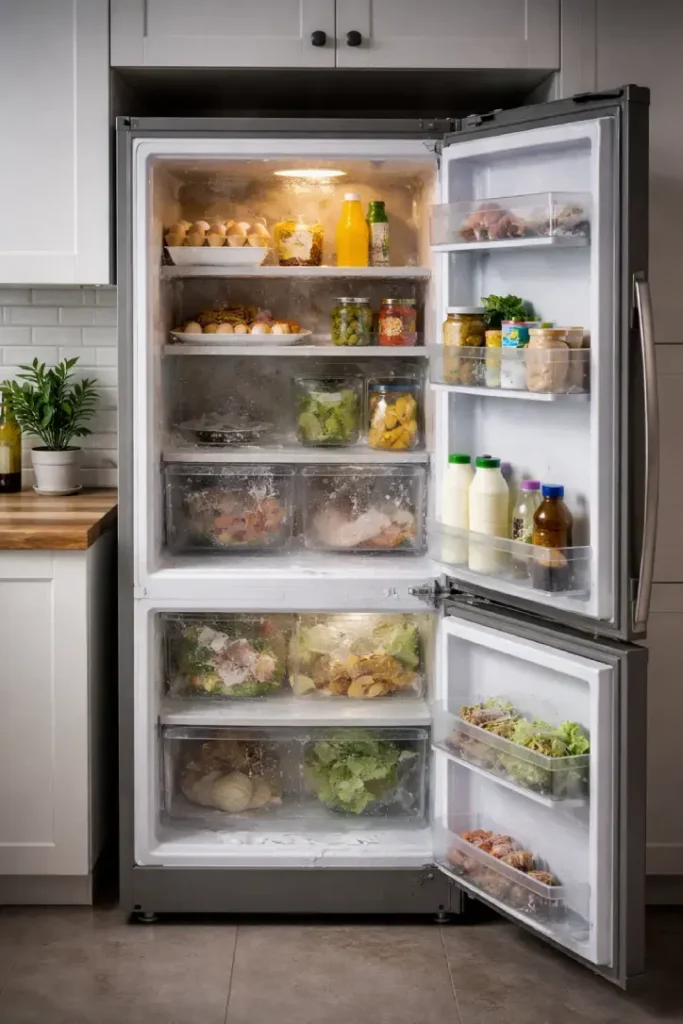
Frost buildup on evaporator coils can choke airflow. Then you get a fridge not cooling scenario even though the freezer seems “kind of cold.”
Clues:
- Frost/ice on the freezer back panel
- Fridge warms while freezer struggles
- Temporary improvement after unplugging for 24 hours (ice melts)
What to do:
A full manual defrost (unplug, doors open, towels ready) can restore cooling short-term, but recurring frost means a failing defrost heater, sensor, timer/control board, or door-seal leak.
6) Door gasket leaks and alignment issues
Warm air sneaks in, moisture turns to frost, and the unit works harder while temps drift up.
What to do:
Clean the gasket with warm soapy water; check for cracks or warping. Ensure the fridge is level so doors close naturally. Persistent gasket problems can keep a refrigerator not cooling complaint alive even after you clean coils.
A Simple Diagnostic Table You Can Use Today
Use this table to match symptoms to likely causes and decide whether it’s DIY or pro time.
| Symptom you notice | Likely cause | What to check (DIY) | When to call a pro |
|---|---|---|---|
| Fridge warm, freezer mostly okay | Evaporator fan issue or blocked vents | Clear vents, listen for the evaporator fan, avoid overpacking shelves | If the fan won’t run consistently (motor/wiring/control issue) |
| Both fridge and freezer are warm | Dirty coils, condenser fan problem, or compressor trouble | Clean condenser coils, check condenser fan spins freely, confirm proper ventilation | If fans run but temperatures still won’t drop |
| Frost/ice on the freezer back wall | Defrost system failure | Do a full manual defrost, check door closure and gasket seal | If heavy frost returns quickly after defrost |
| Runs constantly, but still warm | Restricted airflow, dirty coils, or sealed-system issue | Clean coils, verify vents are open, make sure nothing blocks airflow paths | If the compressor runs but cooling doesn’t improve |
| Water under crisper drawers + warmer temps | Defrost drain clog plus airflow/defrost problems | Clear the drain (model-dependent), look for ice buildup around the drain area | If it keeps coming back or requires panel removal to access |
| One area freezing while another stays warm | Air damper stuck / airflow imbalance | Reorganize items, keep vents unblocked, confirm settings aren’t too cold | If the damper motor/control system is failing |
If your refrigerator not cooling issue matches “both compartments warm and fans seem normal,” sealed-system problems become more likely.
Safety + Tools Checklist (Before You Start)
You can do a lot safely—just don’t turn a small problem into an electrical one.
- Unplug before cleaning coils or accessing fan areas.
- Use a thermometer to confirm temps (don’t guess).
- Protect floors with towels if you’re defrosting.
- Avoid sharp tools to chip ice—puncturing a coil can ruin the unit.
Helpful tools:
- Vacuum with crevice tool + soft brush
- Coil cleaning brush
- Fridge/freezer thermometer
- Flashlight
- Mild soap + cloth for gaskets
If the fridge not cooling situation requires electrical testing (multimeter), only proceed if you’re comfortable doing it safely.
When “Fridge Not Cooling” Is Actually a Bigger Problem
Some signs suggest you should stop troubleshooting and get professional service:
- The compressor is extremely hot and cooling is still poor
- You hear clicking repeatedly (start relay/overload issues are possible)
- The fridge is warm but no fans run even when the unit “should” be cooling
- A chemical smell or oily residue appears near the back (possible refrigerant leak)
- The unit cools for a day after defrosting, then fails again quickly (often defrost-related, sometimes more)
If you’ve cleaned coils, confirmed airflow, checked door sealing, and the refrigerator not cooling persists, a technician can quickly confirm whether it’s fan/defrost/control or sealed-system.
A Practical “Do This in Order” Plan
If you want one clean sequence to follow, here it is:
- Confirm temps with a thermometer and check settings/demos modes.
- Clear vents and reorganize contents for airflow.
- Inspect door closure and gasket seal.
- Clean condenser coils thoroughly.
- Listen for evaporator and condenser fans.
- Look for frost patterns that suggest a defrost problem.
- If still failing: consider professional diagnosis—especially if refrigerator not cooling affects both compartments.
This approach fixes many fridge not cooling cases without replacing parts blindly.
- Warranty on repair
- Licensed & Experienced Techs
- Same-Day Fridge Repair
- Open 7 Days a Week
Protect Your Food While You Troubleshoot
If the fridge not cooling and temps are rising above safe ranges, move perishables to a cooler with ice or a neighbor’s fridge. Food safety matters more than finishing the DIY checklist.
If you want, tell me your fridge type (top-freezer, side-by-side, French door), what’s warm (fridge, freezer, or both), and whether you see frost buildup—then I can point to the most likely cause of your refrigerator not cooling in a more targeted way.